N
Netanya Sadoff
Guest
- Thread Author
- #1
Ah, autumn! The season of harvest, apples, and fallen leaves. Although the growing season is wrapping up, there are a variety of native wildflowers that have yet to receive the memo from mother nature. Indeed, there are endless combinations of plants to mix and match when designing (or simply appreciating!) a native autumnal plant community.
For this list, I chose five native plant genera that provide outstanding color and character to any garden. Each genus contains species with blooms that last until at least the end of September, with many going longer into the fall season. All of these plants are also perennials, ensuring you’ll have a great looking garden year-after-year with only a little upkeep.

In my opinion, asters are the unofficial mascot for autumn blooms. Their vibrant, starburst-shaped flowers are unmistakable, (even for amateur plant enthusiasts!) and as iconic to fall as pumpkin pie!
There are 20 “true asters” (members of the genus Symphyotrichum) found in Minnesota, the majority of which sport fall-blooming flowers. Some native favorites include:
Tip: For fall containers, consider replacing mums with native asters! These cold-hardy friends add gorgeous fall color while providing food and habitat for native pollinators. New England Asters look great and grow well in pots!
Goldenrods – Solidago spp.
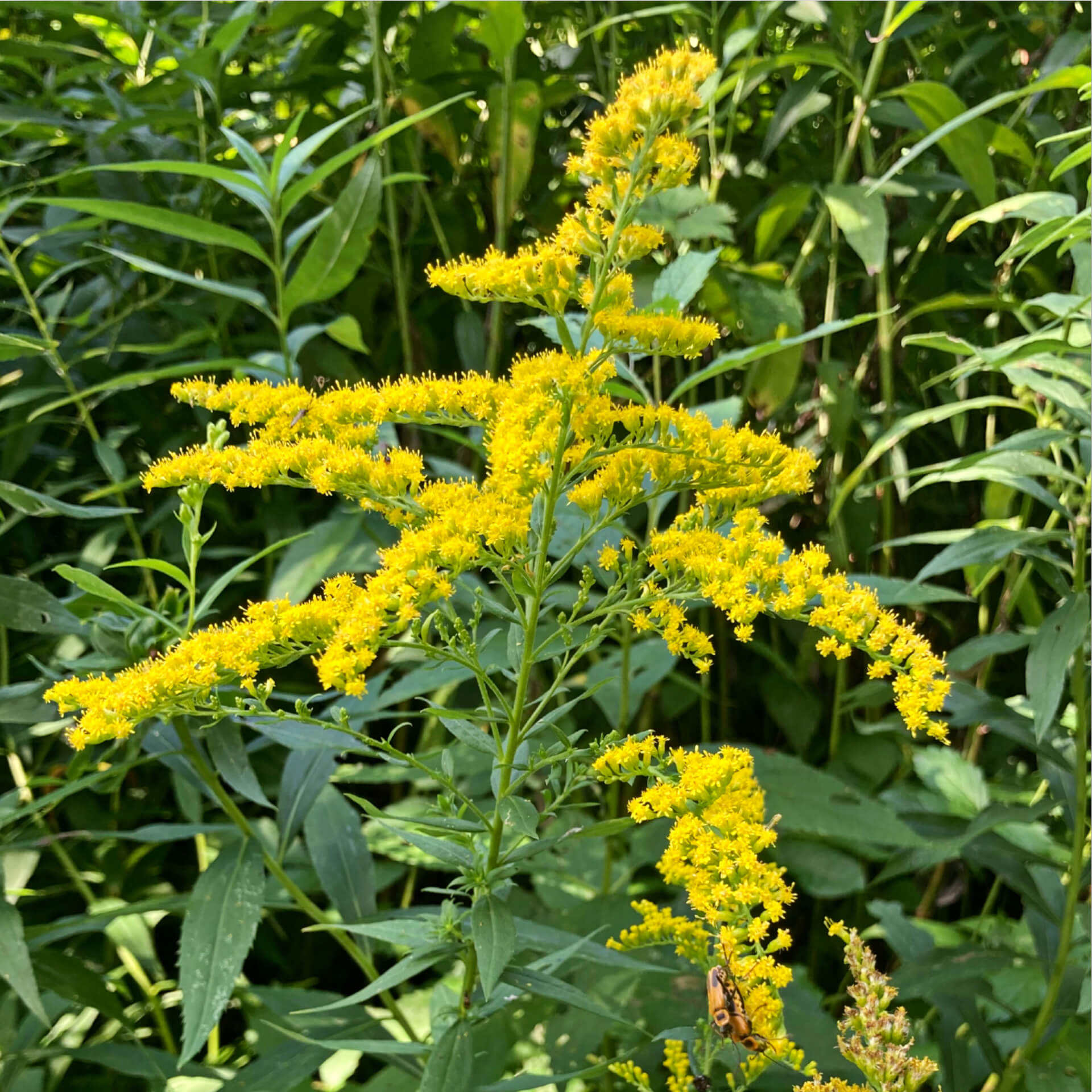
Don’t mistake this bee feeder for ragweed! These flaxen flowers belong to goldenrod, a staple wildflower of the forests and plains.
Alongside their aesthetic complement, the asters, goldenrods are one of the most widespread and biodiverse wildflower genera found in the Midwest. From the limber, reaching stalks of tall goldenrod (Solidago altissima, right) to the shade-loving short stack known as zigzag goldenrod (solidago flexicaulis), there is a solidago for every yard and garden!
Fun fact: goldenrods are a host plant for over 100 species of native insect, many of which cannot reproduce or feed on plants other than goldenrod.
Gentians – Gentiana spp.

It’s time for this late-season bloom to finally receive its flowers: gentians are my sleeper pick that take a prairie planting from good to great!
Sporting an unusual shape and design, gentians are very unique plants. They are in the order Gentianales, which separated off from the rest of the flowering plants roughly 100 million years ago! Within Minnesota, there are 11 known species of gentian, with no close relatives to other plants native to the state.
While tall favorites like asters and goldenrods often steal the show, the peek-a-boo pop of periwinkle color found in autumn blooms like bottle gentian (Gentiana andrewsii, left) and downy gentian (Gentiana puberulenta) draws the eye downward, providing visual interest throughout the prairie composition.
Fun fact: taxonomically, The closest plant family to gentians is Rubiaceae, aka the coffee family!
Sunflowers – Helianthus spp.

You know ’em, you love ’em— sunflowers are one of the most iconic flowers around. Beyond annual cut-flowers, oil seed, and confectionary varieties, there are also many native perennial sunflowers to landscape with or enjoy out in the prairie.
For reliable color in sunny areas from July through October, try Maximilian Sunflower (Helianthus maximiliani, right) or Sawtooth sunflower (Helianthus grosseserratus). Like most sunflowers, these guys get tall— up to 10 feet in height!
Turtleheads – Chelone spp.

The Turtleheads (Chelone spp.) are an aptly-named genus of plants. Named for their turtle-like flowers, this plant’s habitat pleasantly coincides with that of its namesake animal.
These cuties are found in moist environments with ample sun. They often grow in wetlands, wet meadows, and besides lakes and ponds.
There are two species of turtlehead native to Minnesota: white turtlehead (Chelone glabra) and red turtlehead (Chelone obliqua, left). White turtlehead is hardy up to zone 3a. They are found throughout Minnesota, even in the far northern reaches of the state. In contrast, red turtlehead is hardy to zone 5a. They are a rare occurrence found mostly in the lower third of the state, and is threatened throughout much of its native range.
White turtleheads are more readily available than red turtleheads for purchase from native plant stores, due to the rare nature of the latter. Fortunately, some white turtlehead plants have pink-tinged flowers, so you can enjoy the color without the laborious hunt for a rare species!

Netanya Sadoff is a bold young writer and educator with a passion for all things gardening. A lifelong plant enthusiast, Netanya is delighted to contribute to Northern Gardener as their Marketing Intern since June 2025.
Follow them @Net.Sadoff on Instagram.
The post Perennial Wildflower Superstars for the Autumnal Garden appeared first on Northern Gardener.
For this list, I chose five native plant genera that provide outstanding color and character to any garden. Each genus contains species with blooms that last until at least the end of September, with many going longer into the fall season. All of these plants are also perennials, ensuring you’ll have a great looking garden year-after-year with only a little upkeep.
Five Wildflower favorites for the autumnal garden
Asters – Symphyotrichum spp.
Asters –Symphyotrichum spp.
In my opinion, asters are the unofficial mascot for autumn blooms. Their vibrant, starburst-shaped flowers are unmistakable, (even for amateur plant enthusiasts!) and as iconic to fall as pumpkin pie!
There are 20 “true asters” (members of the genus Symphyotrichum) found in Minnesota, the majority of which sport fall-blooming flowers. Some native favorites include:
- Smooth Blue Aster (left, (Symphyotrichum laeve)
- New England Aster – (Symphyotrichum novae-angliae)
- Sky-blue Aster – (Symphyotrichum oolentangiense)
Tip: For fall containers, consider replacing mums with native asters! These cold-hardy friends add gorgeous fall color while providing food and habitat for native pollinators. New England Asters look great and grow well in pots!
Goldenrods – Solidago spp.
Goldenrod- Solidago spp.
Don’t mistake this bee feeder for ragweed! These flaxen flowers belong to goldenrod, a staple wildflower of the forests and plains.
Alongside their aesthetic complement, the asters, goldenrods are one of the most widespread and biodiverse wildflower genera found in the Midwest. From the limber, reaching stalks of tall goldenrod (Solidago altissima, right) to the shade-loving short stack known as zigzag goldenrod (solidago flexicaulis), there is a solidago for every yard and garden!
Fun fact: goldenrods are a host plant for over 100 species of native insect, many of which cannot reproduce or feed on plants other than goldenrod.
Gentians – Gentiana spp.
Gentians – Gentiana spp.
It’s time for this late-season bloom to finally receive its flowers: gentians are my sleeper pick that take a prairie planting from good to great!
Sporting an unusual shape and design, gentians are very unique plants. They are in the order Gentianales, which separated off from the rest of the flowering plants roughly 100 million years ago! Within Minnesota, there are 11 known species of gentian, with no close relatives to other plants native to the state.
While tall favorites like asters and goldenrods often steal the show, the peek-a-boo pop of periwinkle color found in autumn blooms like bottle gentian (Gentiana andrewsii, left) and downy gentian (Gentiana puberulenta) draws the eye downward, providing visual interest throughout the prairie composition.
Fun fact: taxonomically, The closest plant family to gentians is Rubiaceae, aka the coffee family!
Sunflowers – Helianthus spp.
Sunflowers – Helianthus spp.
You know ’em, you love ’em— sunflowers are one of the most iconic flowers around. Beyond annual cut-flowers, oil seed, and confectionary varieties, there are also many native perennial sunflowers to landscape with or enjoy out in the prairie.
For reliable color in sunny areas from July through October, try Maximilian Sunflower (Helianthus maximiliani, right) or Sawtooth sunflower (Helianthus grosseserratus). Like most sunflowers, these guys get tall— up to 10 feet in height!
Turtleheads – Chelone spp.
Turtleheads – Chelone spp.
The Turtleheads (Chelone spp.) are an aptly-named genus of plants. Named for their turtle-like flowers, this plant’s habitat pleasantly coincides with that of its namesake animal.
These cuties are found in moist environments with ample sun. They often grow in wetlands, wet meadows, and besides lakes and ponds.
There are two species of turtlehead native to Minnesota: white turtlehead (Chelone glabra) and red turtlehead (Chelone obliqua, left). White turtlehead is hardy up to zone 3a. They are found throughout Minnesota, even in the far northern reaches of the state. In contrast, red turtlehead is hardy to zone 5a. They are a rare occurrence found mostly in the lower third of the state, and is threatened throughout much of its native range.
White turtleheads are more readily available than red turtleheads for purchase from native plant stores, due to the rare nature of the latter. Fortunately, some white turtlehead plants have pink-tinged flowers, so you can enjoy the color without the laborious hunt for a rare species!
Final tips
- Like any planting, it’s good practice to design your garden so at all times of the growing season, there are a few things in bloom. Check out our native plant bloom calendar to help stagger your blooms throughout the seasons!
- Natives can either be grown from seed or purchased as live plants. Some native seeds must go through special chemical or physiological processes (known as seed scarification or stratification, respectively) before becoming viable to grow. Be sure to consult a native seed starting guide (such as this one from Prairie Moon Nursery) before planting.
More Resources on Native Wildflowers
- Minnesota Native Wildflower database
- Flower Chasers Blog – Interesting articles about all sorts of native MN wildflowers
- Blue Thumb – native plant finder
Netanya Sadoff is a bold young writer and educator with a passion for all things gardening. A lifelong plant enthusiast, Netanya is delighted to contribute to Northern Gardener as their Marketing Intern since June 2025.
Follow them @Net.Sadoff on Instagram.
The post Perennial Wildflower Superstars for the Autumnal Garden appeared first on Northern Gardener.