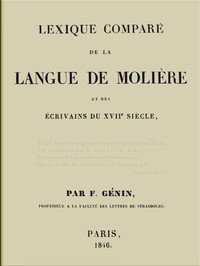
Lexique comparé de la langue de Molière et des écrivains du XVIIe siècle by Génin
Read "Lexique comparé de la langue de Molière et des écrivains du XVIIe siècle by Génin" Online
This book is available in the public domain. Start reading the digital edition below.
START READING FULL BOOKBook Preview
A short preview of the book’s content is shown below to give you an idea of its style and themes.
Okay, let's be clear: this isn't a beach read. Lexique comparé de la langue de Molière is a reference book, a list. But its story is hidden in the comparisons. François Génin, a 19th-century scholar, took the sparkling, witty French of Molière, Racine, and La Fontaine and laid it side-by-side with the French of his own time. Page by page, he shows us words that changed meaning, phrases that fell out of use, and expressions that went from common slang to forgotten history.
Why You Should Read It
Reading this feels like getting a backstage pass to the 17th century. You stop seeing Molière's plays as perfect, frozen monuments. Instead, you see them as living, breathing works written in the messy, vibrant language of the day. When Génin points out that a word meant something slightly dirtier or more specific back then, a joke suddenly lands 350 years later. It turns literature from something you admire under glass into something you can almost hear and smell. It makes the past feel less distant.
Final Verdict
This is a niche pick, but a brilliant one. It's perfect for history buffs who love social details, for actors or directors tackling classic French plays, and for anyone who geeks out over how language evolves. If you think etymology is dry, this might change your mind—it's less like a dictionary and more like an archaeologist's journal, carefully brushing the dust off the words that made people laugh centuries ago. Don't read it cover-to-cover; dip in, look up your favorite Molière scene, and see it transform.
This digital edition is based on a public domain text. You are welcome to share this with anyone.