1


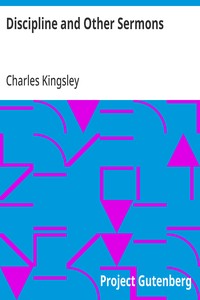
Town and Country Sermons — Story, Setting & Ideas
4
1
Project Gutenberg
2004
Church of England -- Sermons; Sermons, English -- 19th century
Readers of public-domain and historical texts
Project Gutenberg digital edition
en
Edition facts
Words: 92,264
Reading time: 402 min
Text sections: 9
Source:
Project Gutenberg record #11536
Charles Kingsley's sermons move between rural and urban settings, using concrete imagery and a recurring contrast between humility and pride, to urge obedience and self-sacrifice modeled on Christ.
Editorial Edition Score
4.7/5
★★★★★
★★★★★
Calculated from edition completeness, EPUB availability, text structure and catalogue metadata. Not a user rating.
Edition quality
Charles Kingsley opens his first sermon with a direct address to Passion Week, grounding his exhortation in Philippians 2:5-11. He immediately establishes a pattern: Christ's self-emptying is held up as the key-note, and the congregation is told that 'obedience and self-sacrifice' must shape their observance. Kingsley does not linger on abstract doctrine; he contrasts the 'false gods' who sit aloft with a Saviour who 'cared not to save himself.' The sermons that follow sustain this concrete, antithetical style, moving between town and country settings without losing focus on the inner posture of the hearer.
The Recurring Contrast Between Humility and Pride
Across the excerpts, Kingsley returns to a sharp binary: the proud man looks down, the humble man looks up. He warns that the proud person 'has put himself into a wrong position' by turning his face from God, while the humble person 'fills his soul with the sight of an excellence' he cannot yet reach. This is not a static moralism; Kingsley insists that humility is the only position from which grace can be received, because 'God resisteth the proud' in order to turn him around. The language is active—God will 'overthrow' and 'bring his plans to nought'—and the imagery of looking upward versus looking downward recurs as a structural device across multiple sermons.
Movement Between Town and Country as a Rhetorical Frame
The title Town and Country Sermons signals a deliberate alternation of setting, but the excerpts show that Kingsley uses this movement to address different social conditions without changing his core message. In the Passion Week sermon, preached before the Queen, he speaks of those who 'attend church as often as possible' and warns against 'vain repetitions.' In later passages, he addresses those who 'oppress' and those who are 'lowly.' The shift is not merely geographic; it allows Kingsley to apply the same principle—obedience and self-sacrifice—to court and cottage alike. The reader can trace how the same antithesis of pride and humility plays out in varied social contexts.
The Use of Classical and Biblical Authorities as Mirrors
Kingsley does not rely solely on Scripture. In one excerpt, he quotes a 'wise heathen'—Plutarch, though unnamed in the text—who wrote that reading the lives of good men 'served him as a looking-glass' for self-improvement. Kingsley then applies this to Christian humility: the example of Christ is the ultimate mirror. This technique of layering authorities—Paul, David, a pagan moralist—creates a cumulative argument that humility is not a sectarian virtue but a universal human duty. The quoted heathen is praised as 'not far from the kingdom of God,' a phrase that subtly expands the sermon's audience beyond the church walls.
The Structural Role of the Congregation as Addressee
Kingsley repeatedly uses direct address—'my friends,' 'you'—to pull the listener into the argument. The sermons are not treatises; they are spoken performances that assume a responsive audience. In the first sermon, he asks 'How, then, shall we keep his Passion Week?' and immediately lists possible practices before warning of their pitfalls. This dialogic structure, with its rhetorical questions and second-person pronouns, gives the text an urgent, pastoral tone. The reader of the printed sermons can sense the pause, the shift in voice, the moment when Kingsley turns from exposition to application.
Kingsley's sermons reward attention to their rhetorical architecture: the repeated contrasts, the movement between settings, and the layered citations all serve a single pastoral aim. Readers will find that the sermons gain coherence when read as a sequence rather than as isolated addresses. The title's promise of town and country is fulfilled not by separate audiences but by a unified voice that adapts its examples without altering its central call to humility and obedience.
Reader reflection
What did you think of this book?
Answer a few questions and save a private reflection on this device.
Your progress
0
/
10
2
Did this book hold your interest?
3
How likely are you to recommend this book?
4
What was the reading difficulty like?
5
Did the book give you something worth debating?
6
Did anything about the book feel genuinely new?
7
Was the book what you thought it would be?
8
Would a second reading be valuable?
9
In one sentence, what did you learn?
10